Part of our field series on equipping environmental remediation projects. See also: The 5 Equipment Mistakes That Blow Up Remediation Budgets
Contamination doesn’t care about your schedule. Petroleum floats, chlorinated solvents sink, metals stay put, and some compounds move through groundwater for miles. Every contaminant behaves differently, and that behavior decides what equipment the cleanup needs.
This field guide is organized the way a site is: dirt, water and air. For each one we cover the common contaminants, the main cleanup approaches and the environmental remediation equipment that typically shows up on site. It is not a design manual. Every remedy is driven by the site’s investigation and regulatory decision documents. But it is a useful map for project managers, estimators and anyone planning a remediation equipment package.
Part 1: Dirt (Contaminated Soil)
Soil is where most remediation projects start, and excavation is still the most common way to deal with it. The contaminant determines what happens after the bucket comes up.
Petroleum hydrocarbons (fuel, oil, diesel). Common at former gas stations, fuel depots, rail yards and industrial sites. Contaminated soil is often excavated and hauled off, or treated on site through bioremediation, where soil is spread in treatment cells and turned to encourage natural breakdown.
Typical equipment: excavators, loaders, dump or articulated trucks, screening plants, soil-turning equipment for treatment cells, and water trucks for dust control.
Heavy metals (lead, arsenic, chromium, zinc, cadmium). Metals don’t break down, so they have to be removed, isolated or locked in place. Approaches include excavation and disposal, capping and stabilization, where binders like cement are mixed into the soil to keep metals from moving.
Typical equipment: excavators with mixing attachments or mixing heads, pug mills, reagent silos and feeders, compaction equipment for caps, and geotextile handling.
PCBs, coal tar and manufactured gas plant waste. These are persistent and often found together with other contaminants. Excavation with off-site disposal is common, and some sites use thermal treatment.
Typical equipment: excavators, enclosed or tented work areas for odor control, odor suppression foam systems, and lined roll-off containers or trucks.
Watch out for: soils that are wetter or more contaminated than the investigation suggested. Build in capacity for drying, amending and stockpiling.
Part 2: Water (Groundwater and Surface Water)
Groundwater cleanups tend to be long, and they rely on equipment that runs continuously for months or years. Reliability matters as much as capacity.
Dissolved petroleum and fuel additives. Approaches include pump-and-treat systems, air sparging (injecting air below the water table to strip out contaminants) and enhanced bioremediation.
Typical equipment: submersible pumps, oil-water separators, air strippers, granular activated carbon vessels, blowers and compressors, and drilling rigs for wells.
Chlorinated solvents (TCE, PCE). These dense compounds sink below the water table and can be hard to reach. Treatment includes pump-and-treat, injected chemical or biological treatments, and thermal methods.
Typical equipment: injection trailers, mixing tanks, direct-push and drilling rigs, pumps, carbon treatment and, for thermal remedies, large temporary power.
PFAS (“forever chemicals”). PFAS are a fast-growing remediation market, driven by new federal and state standards. Water treatment usually relies on granular activated carbon, ion exchange resin or membrane systems. See EPA’s PFAS resources for the current regulatory picture.
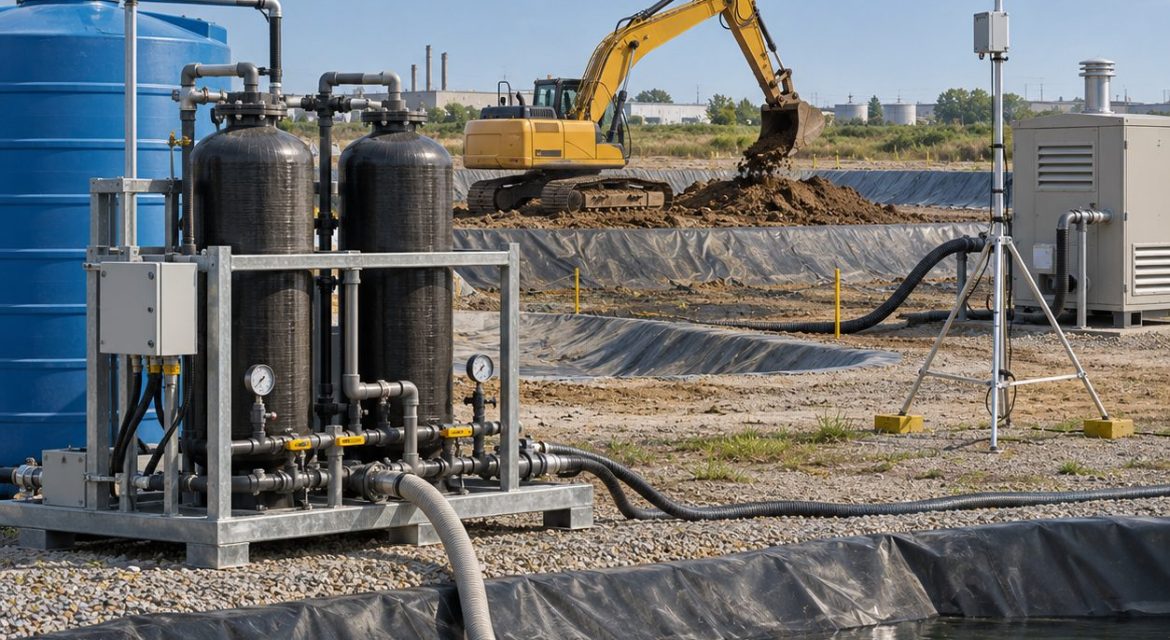
Typical equipment: treatment skids with carbon or resin vessels, frac tanks and storage tanks, pumps, and careful handling of spent media.
Construction dewatering on contaminated sites. Even when groundwater isn’t the target, excavations below the water table create contaminated water that has to be collected, treated and discharged under permit.
Typical equipment: trash and dewatering pumps, wellpoints, frac tanks, weir tanks, bag and sand filters, and carbon vessels.
Watch out for: storms and higher-than-expected inflows. Water systems should always have backup pumping and storage capacity.
Part 3: Sediment (The Bottom of Rivers, Harbors and Canals)
Sediment cleanups sit between dirt and water, and they bring their own equipment. Contaminated sediment in rivers, harbors and canals is usually removed by dredging, covered with an engineered cap, or both. Some of the largest cleanups in the country, like the Gowanus Canal and the Lower Duwamish Waterway, are sediment projects. We cover several of them in What It Actually Takes to Equip a Superfund Site.
Typical equipment: barge-mounted excavators and environmental buckets, hydraulic dredges, material barges and tugs, turbidity curtains, cap material placement equipment, and on-shore dewatering systems such as geotextile tubes, filter presses and stabilization mixing.
Watch out for: limited shoreline space. Sediment projects need a staging and processing area, and in urban areas that space is hard to find. A turnkey laydown yard can solve a lot of problems.
Part 4: Air (Soil Vapor and Air Quality)
Some contaminants travel as vapor. Volatile compounds in soil and groundwater can move into the air above the site or into nearby buildings, and nearly every remediation project needs to monitor air quality during the work.
Soil vapor extraction (SVE). SVE pulls vapor out of soil using vacuum blowers, then treats it before discharge.
Typical equipment: vacuum blowers, moisture separators, vapor-phase carbon or thermal oxidizers, and generators where power is limited.
Dust and perimeter air monitoring. Excavation of metals, PCBs or asbestos-containing material requires dust control and real-time monitoring at the work zone and the site perimeter.
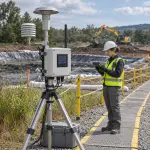
Typical equipment: water trucks, misting cannons, real-time particulate and gas monitors, weather stations, and connected dashboards that alert the team when levels approach action limits.
Watch out for: community concerns. Visible dust and noticeable odors can stop a project faster than any equipment failure. Monitoring and control equipment should be in place before the first excavation.
The Equipment Every Remediation Site Needs
No matter the contaminant, a few things show up on almost every site:
- Decontamination: decon pads, pressure washers and water capture for equipment and personnel.
- Worker safety: exclusion zone controls, personal protective equipment, gas detection, and safety technology like proximity detection.
- Site support: office and break trailers, sanitation, temporary power, lighting, fencing and security.
- Waste handling: roll-offs, lined containers and staging for characterization and disposal.
- Visibility: telematics and site technology to track equipment use, fuel and location. See advanced construction technologies.
Workers on these sites also need training under OSHA’s HAZWOPER standard. For deeper technical information on specific treatment technologies, EPA’s CLU-IN site is an excellent resource.
Rent, Own or Mix?
Many remediation contractors own a core fleet of excavators and trucks but rent the rest: treatment systems, tanks, specialty pumps, monitoring equipment and site support. That approach makes sense because the equipment mix changes from project to project depending on the contaminant. A site with chlorinated solvents and a site with lead-impacted soil need very different packages.
Equipment rental and fleet management lets you build the package around the site, scale up when conditions change, and send equipment back when a phase ends. For small and mid-sized contractors, it also makes it possible to bid larger projects without buying equipment for every possible contaminant.
Frequently Asked Questions
What equipment is used for soil remediation?
Most soil remediation uses excavators, loaders and haul trucks, along with screening plants, mixing equipment for stabilization, and treatment cells for bioremediation. Decontamination and dust control equipment are also standard.
What equipment is used for groundwater remediation?
Common groundwater remediation equipment includes pumps, air strippers, activated carbon vessels, ion exchange systems, air sparging blowers, injection trailers and drilling rigs for wells.
How is PFAS removed from water?
PFAS is most often removed with granular activated carbon, ion exchange resin or membrane systems such as reverse osmosis. Spent treatment media has to be managed carefully.
About Nimble Managed Services
Nimble is a government-certified small-business set-aside partner providing managed services to construction, engineering, environmental, federal and infrastructure contractors.
Nimble currently lists certifications including WOSB, EDWOSB, HUBZone, SDB, DBE and SBE, along with additional state and utility certifications. Its managed-service capabilities include equipment rental and fleet management, turnkey laydown yards, subcontract management, site services, construction technologies, sustainability support and compliance consulting.
Learn more about Nimble’s Small Business Advantage
Scoping equipment for a remediation project? Tell us about the site and the contaminants, and we’ll talk through what the job will actually need. Start a conversation with the Nimble team.