Construction accounts for 19% of all U.S. worker fatalities while representing only about 6% of the workforce. That gap has persisted for decades despite improved regulations, better PPE, and extensive safety training programs. The reason isn’t that contractors don’t take safety seriously. It’s that the most dangerous moments on a job site happen faster than human reaction time can prevent them.
The trend isn’t improving. Construction recorded 1,075 worker fatalities in 2023 — more than any other private industry sector — and the industry’s fatal injury rate now stands at 9.2 per 100,000 full-time workers, nearly three times the all-industry average of 3.3. The National Safety Council puts the average cost of a single fatal work injury at $1.54 million, on top of a human toll no dollar figure captures.
Where the fatalities actually come from
OSHA’s “Focus Four” hazards — falls, struck-by incidents, electrocutions, and caught-in/between accidents — account for 65% of all construction fatalities. Approximately 75% of struck-by fatalities involve heavy equipment such as trucks or cranes, and runovers and backovers by dump trucks alone account for nearly half of vehicle-related fatalities. These follow predictable patterns — which means they’re also preventable, given the right systems.
What the technology looks like in practice
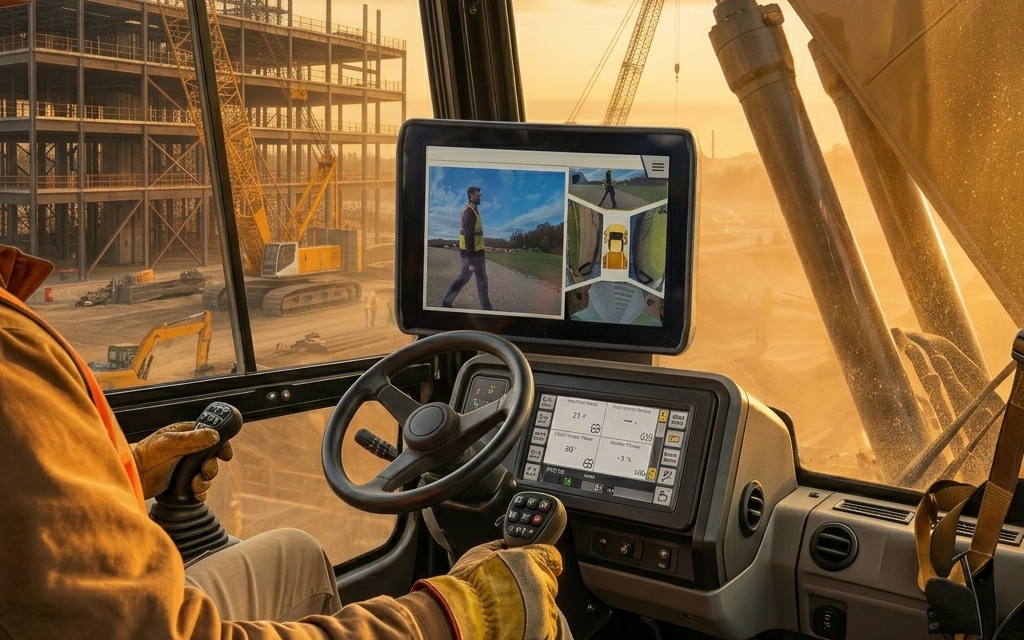
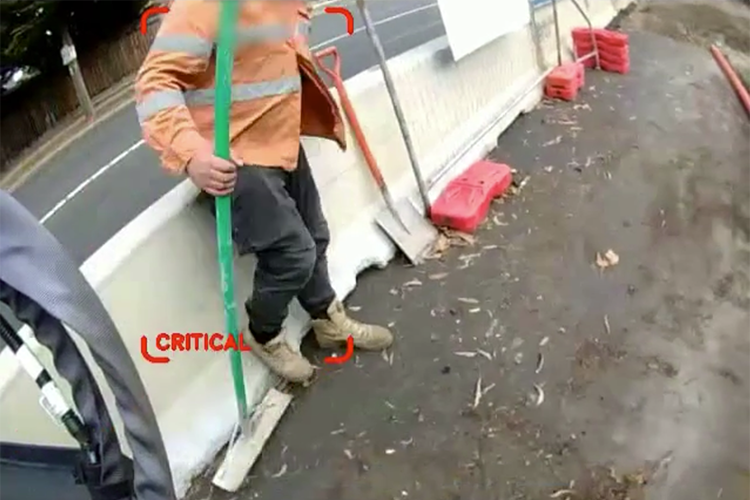
AI-powered proximity detection uses cameras and sensor arrays mounted on equipment to track workers and other machines within a defined radius, issuing real-time alerts to operators before a strike can occur. Unlike spotter systems that rely on a human being in the right place and paying attention, proximity detection is always active and doesn’t blink. In one large-scale UK deployment across more than 5,000 pieces of equipped plant, this kind of system produced a 65% average reduction in red-zone incursions and recorded zero people-plant interface accidents — evidence that a system that’s always watching turns near-misses into non-events instead of statistics.
High-definition rearview cameras address the backover problem specifically. On Nimble’s East Texas project, subcontractors’ trucks delivering over 15,000 tons of fly ash were equipped with HD rearview cameras — a direct response to the backover fatality risk in high-traffic delivery zones.
Telematics-based geofencing creates virtual boundaries on equipment — preventing machines from entering designated no-go zones and alerting operators when they approach a boundary. The alert happens before the boundary is crossed, not after.
Wearable monitoring tracks worker location and physiological indicators (fatigue, heat stress, heart rate) in real time, surfacing risk before it becomes an incident. Adoption is early but growing, particularly on federal and military projects. OSHA has linked environmental heat exposure to 999 worker deaths between 1992 and 2021 — the kind of slow-building risk a physiological sensor can catch long before a supervisor would notice.
Real-time site intelligence platforms pull data from cameras, sensors, and machine positioning systems into a single feed instead of a dozen disconnected ones — the same thinking behind Nimble’s own Safety-as-a-Service approach. Vendors like ConSafetyTech build the underlying Vision AI collision-awareness systems that make this kind of always-on monitoring possible at scale.
The shift from reactive to proactive
The traditional job site safety model is largely reactive: incident happens, investigation follows, procedure gets updated. The technology described above shifts the model toward prevention — creating systems that act on hazard conditions before human error can compound them. The construction industry’s fatality rate increased 11% between 2021 and 2022. That trend isn’t going to reverse through more signage and toolbox talks. The National Safety Council estimates work injuries cost the U.S. economy $181.4 billion in 2024 alone. Prevention isn’t just the safer call — it’s the more affordable one.
Have a question about safety technology on your site?
Every job site’s risk profile looks a little different, and this post only scratches the surface of what’s available. If something here raised a question, or you want to talk through what the right safety technology stack looks like for your project, give us a call at (916) 619-1900 or email me directly at Randall@nimblems.com. We’d love to hear from you.
About Nimble Managed Services
Nimble is your proven reliable, government certified, small business set-aside (SBSA) partner. Acting as an extension of your team, Nimble provides high-level reporting and consulting solutions. We are your single source for construction managed services for: Construction Equipment, Site Services, Advanced Technologies.
Certifications:
WOSB | EDWOSB | HUBZone | SDB | DBE (All 50 States) | SBE (All 50 States) | WBE | SB (CA) | SEED (SMUD)