The Hidden Cost of Disorganization
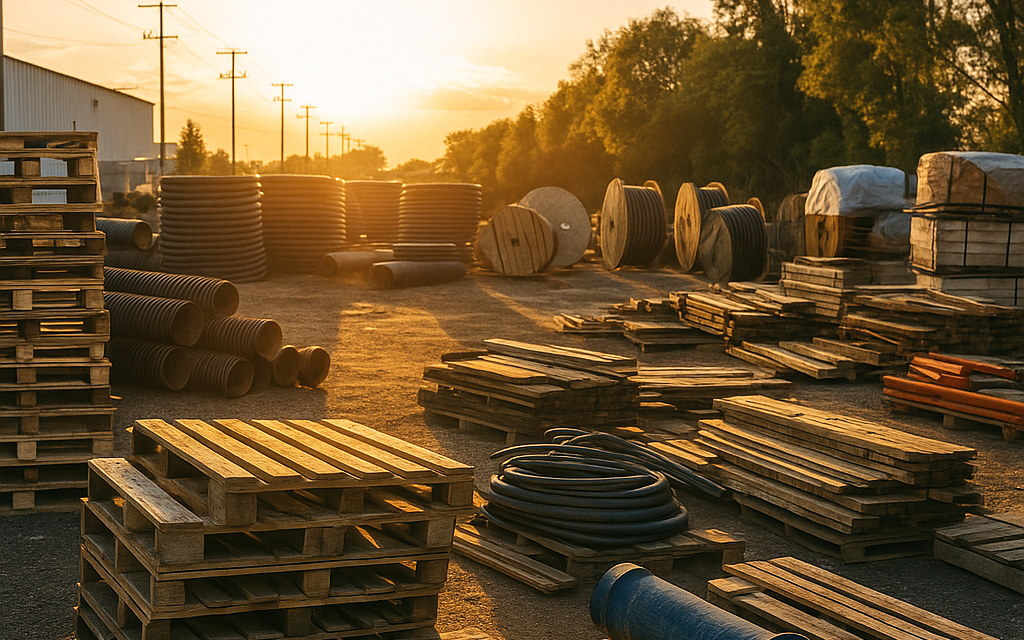
Every large-scale environmental or infrastructure project depends on an efficient laydown yard — the logistical hub where equipment, materials, and supplies are received, stored, and dispatched. Yet for all its importance, the yard is often the least optimized and most overlooked component of project management.
Poorly managed yards delay schedules, inflate budgets, and disrupt coordination between teams. According to a 2023 National Institute of Building Sciences report, project teams lose an average of 8–12% of total field productivity due to disorganized storage and untracked material movement.
That’s not just inefficiency — that’s lost revenue.
1. Materials Arrive On Time — But Nothing’s Where It Should Be
Disorganized inventory management is the first sign of a laydown yard in trouble. Without a digital system to track arrivals and dispatches, materials sit idle, waiting for assignment. Every day an asset is misplaced or delayed represents lost labor hours and additional project costs.
Operational Fix:
A digital inventory and yard management system eliminates guesswork. With technology platforms that log every delivery, location, and retrieval, project managers can instantly verify where critical materials are, who’s responsible, and how quickly they’re moving through the site.
Companies adopting real-time material tracking report reductions of up to 25% in material-related delays and smoother coordination across trades (FMI 2024 Infrastructure Efficiency Study).
2. Equipment Is Idle or Double-Rented
A mismanaged yard hides one of the most expensive problems in construction: idle equipment.
When multiple subcontractors share fleet assets, the lack of centralized tracking leads to double-booking and extended rental periods.
The U.S. Army Corps of Engineers (2023) estimated that uncoordinated laydown yard operations add an average of $18,000 per month per project in wasted rental time.
That’s before factoring in lost uptime or unnecessary maintenance costs.
The Fix:
A managed-services partner can oversee yard logistics, equipment scheduling, and telematics integration to ensure every asset is utilized efficiently.
With tools like Wynne Systems or other enterprise fleet platforms, utilization rates can be monitored in real time, preventing costly downtime and duplicate rentals.
3. Deliveries Go Unverified or Unlogged
Every shipment entering or leaving the site must be verified for accountability, safety, and schedule accuracy. Yet on many projects, that process still depends on paper tickets or email confirmations — both prone to loss and delay.
When delivery records can’t be verified, payment approvals stall, subcontractor disputes increase, and progress tracking becomes unreliable.
Best Practice:
Electronic logging of deliveries through a centralized yard management database ensures complete visibility. Time-stamped digital receipts and automated location tagging eliminate manual reconciliation. For prime contractors, this translates into fewer billing disputes and faster progress payments.
A Berkeley Research Group Operations Review (2024) found that contractors using digital verification for deliveries and dispatches shortened closeout cycles by up to 30%.
4. Yard Management Is Reactive, Not Proactive
Most projects treat the yard as a support function rather than a performance driver — until something goes wrong.
Reactive management leads to clutter, inefficiency, and costly end-of-project reconciliations.
A proactive approach uses data and forecasting to anticipate needs before they impact the field. For example, predictive analytics can flag when storage space is reaching capacity, when heavy equipment is nearing service intervals, or when material restocking is required to maintain workflow continuity.
The Modern Approach:
Integrate yard data with project scheduling tools.
When the yard’s performance metrics are linked to delivery milestones and field operations, resource bottlenecks disappear before they occur.
The result? Predictability and control.
5. Your Yard Isn’t Managed by a Capable Partner
Finally, the most common — and fixable — issue: the yard isn’t managed by a team equipped to run it like an enterprise operation. Even when a small business or subcontractor is listed as responsible, the actual management is often handled manually or fragmented across vendors.
The modern solution is a managed-services partnership — combining certified small-business participation with enterprise-level systems.
A well-equipped partner oversees every layer of the operation, from fleet management and logistics to material tracking and ESG reporting.
Nimble’s Managed Laydown Yard Model Includes:
Real-time material tracking and storage optimization.
Fleet and rental management integrated through enterprise platforms.
Safety and sustainability reporting connected to site operations.
Seamless digital communication between field teams, vendors, and project managers.
This approach replaces outdated spreadsheets and guesswork with precision, transparency, and accountability — turning the yard from a cost center into a value engine.
Conclusion: The Yard Is the Heart of Efficiency
Your laydown yard isn’t just a storage area — it’s the operational backbone of your project. When managed strategically, it keeps schedules tight, resources optimized, and costs under control. When neglected, it becomes the source of hidden inefficiencies and financial risk.
Nimble Managed Services brings structure, visibility, and technology integration to one of the most critical — and underestimated — parts of construction operations.
Through data-driven yard management and enterprise systems, Nimble ensures that every delivery, asset, and dispatch contributes directly to measurable project performance.
Because in today’s infrastructure environment, efficiency isn’t found in the field — it’s built in the yard.
About Nimble Managed Services
Nimble is your proven reliable, government certified, small business set-aside (SBSA) partner. Acting as an extension of your team, Nimble provides high-level reporting and consulting solutions. We are your single source for construction managed services for: Construction Equipment, Site Services, Advanced Technologies.
Certifications:
WOSB | EDWOSB | HUBZone | SDB | DBE (All 50 States) | SBE (All 50 States) | WBE | SB (CA) | SEED (SMUD)
Sources
National Institute of Building Sciences Material Logistics Report – 2023
U.S. Army Corps of Engineers Logistics Performance Study – 2023
U.S. DOT Inspector General CUF Audit Review – 2023
Berkeley Research Group (BRG) Government Oversight Study – 2023
U.S. Department of Transportation DBE Program Guidance (49 CFR Part 26) – 2022